Coolant alert or AC water
Tesla ‘Coolant low’ alert or fluid under the car: AC water or a leak?
A small pool of water under a Tesla is often normal, but a "Coolant low" alert is a different matter. Here is how to tell the two apart and what to do about each.
What the ‘Coolant low’ alert means
Tesla’s Model Y owner’s manual lists the alert as “Coolant low – Schedule service”, with the note “Climate/driving performance may be limited”. It says the vehicle detects a low coolant level, which is often caused by a leak.
The manual also says that if the level is significantly low, it may affect driving performance and climate control, or even cause damage to vehicle components. That is why the alert is worth following up rather than ignoring.
Water under the car: normal or a leak?
Tesla’s manual says it is normal for a small pool of water to form under the car, caused by the air conditioning system’s dehumidifying process. On a hot, humid afternoon with the AC running, a damp patch after parking is not a reason to worry on its own.
The same manual tells owners to look for abnormal fluid deposits underneath the car that might indicate a leak. So the question is whether the patch looks like plain water or like something else.
- Plain water, small patch, after the AC has been running: matches what the manual calls normal.
- A coloured or oily fluid, a patch that keeps growing, or a patch with no AC use: worth a check.
- A “Coolant low” alert on the screen together with any fluid: treat it as a possible leak and book a check.
On colour: Tesla’s Model 3 Emergency Response Guide describes the coolant on that model as blue. A dry paper towel and a photo of the patch are more useful than guessing.
What to do when the alert appears
Tesla’s manual gives two steps for this alert: park the vehicle in a safe location, then inspect underneath the vehicle for signs of a leak or damage. Two simple additions can help the workshop:
- Note what you see: where the fluid is, its colour, and whether the patch is wet or dry.
- Take a photo of the alert and of the ground under the car.
Do not try to top up the battery coolant yourself. Tesla’s manual says battery coolant and brake fluid levels should only be checked by Tesla or a professional automotive repair shop. A top-up also does not fix the reason the level dropped.
When you book, Tesla’s manual suggests giving as much detail as possible, such as photos, sound recordings or videos. The same habit helps with any workshop visit.
Sounds and AC behaviour that are normal
Not every cooling-related change means a fault. Tesla’s manual says that in hot weather the air conditioning compressor can turn on even if you turned it off, because the system’s priority is to cool the battery.
It also says you may hear a whining noise or the sound of water circulating even when the car is not in use. The manual calls these sounds normal: they occur when the internal cooling systems turn on to support functions such as balancing the temperature of the high voltage battery.
These behaviours are normal. A coolant alert, fluid under the car, or a change in cooling or climate performance is a different matter.
Why dust matters for the cooling system
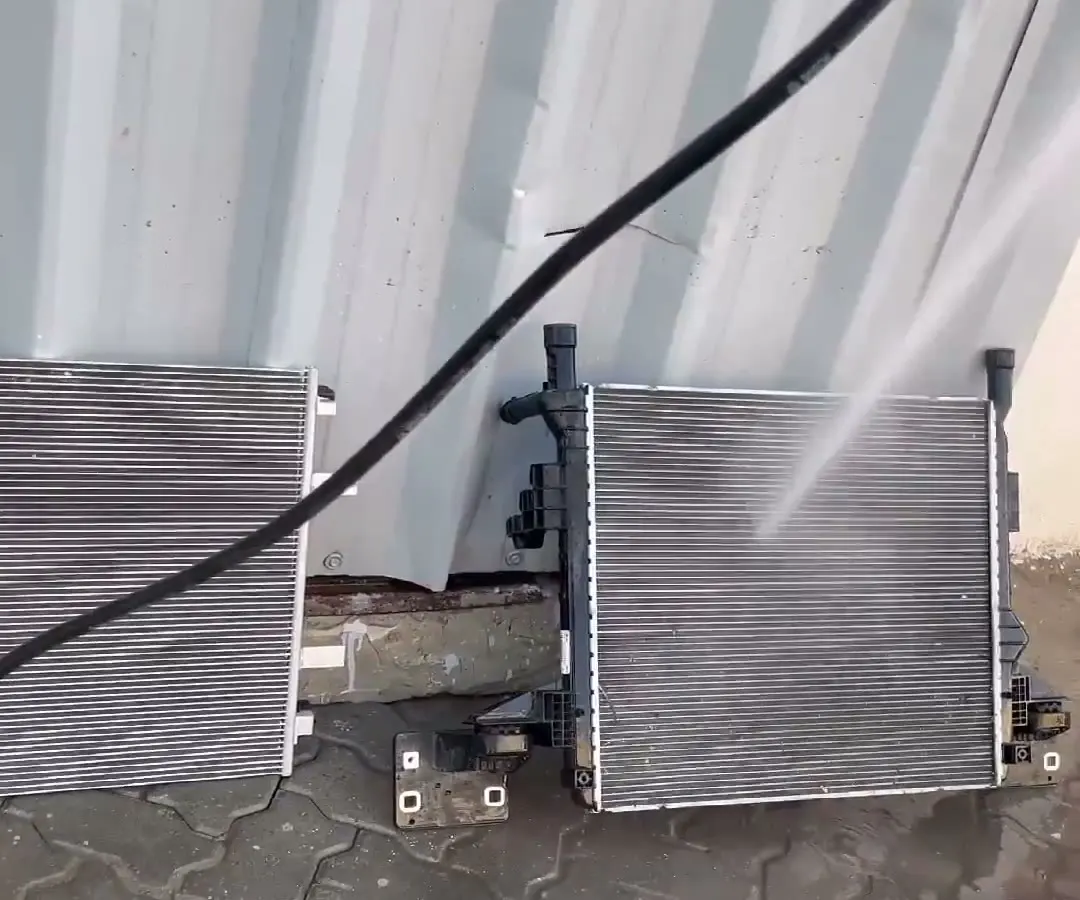
Tesla’s manual says that over time, when driving in dusty or polluted conditions, the radiator may become clogged, and that this can affect air flow and heating/AC performance. Dust and sand are part of daily driving for many cars, so this is a known issue to keep in mind.
The manual points owners to Controls > Service > Maintenance on the touchscreen to check whether the radiator needs cleaning. A workshop check looks at both the coolant side and the airflow side.
What affects the work and the cost
No honest figure can be given for a coolant leak repair before the car is checked. What the work involves depends on what the check finds.
- Where the coolant is escaping and which part is leaking.
- Whether the pump, the radiator or another part is involved.
- Whether the coolant needs a flush and refill after the repair.
- Whether dust in the radiator is also contributing.
Tesla’s manual says the battery coolant does not need to be replaced for the life of the vehicle under most circumstances. A low level therefore points to checking for a leak, not to a routine top-up.
What EV Zone checks and repairs
At EV Zone, a cooling system check covers the coolant level, condition and leaks, the water pump’s operation and noise, the cooling fans, the radiator and condenser fins for dust, sand and damage, and the coolant valve and temperature sensor readings. Repairs include radiator deep cleaning, radiator replacement, coolant flush and refill, and water pump replacement.
If the problem is mainly weak cooling inside the cabin, the AC and heat pump service covers the compressor, condenser, refrigerant and filters.
If your Tesla shows a coolant alert or you are unsure about fluid under the car, book a check at EV Zone in Industrial Area 11, Sharjah.
EV Zone is an independent workshop in Industrial Area 11, Sharjah, for the Tesla Model 3, Model Y, Model S and Model X. See independent Tesla repair in Sharjah for the jobs we do and how to book.
Questions
Is water under my Tesla normal?
A small pool of water can be normal. Tesla’s manual says it forms because of the air conditioning system’s dehumidifying process. If the fluid looks different, keeps growing, or comes with a Coolant low alert, have it checked.
Can I top up the Tesla battery coolant myself?
Tesla’s manual says battery coolant levels should only be checked by Tesla or a professional automotive repair shop. If the coolant is low, the cause is often a leak, so the leak needs finding rather than a top-up.
Does Tesla coolant need to be changed regularly?
Tesla’s manual says the battery coolant does not need to be replaced for the life of the vehicle under most circumstances. A coolant flush and refill may still be part of a repair, depending on what the check finds.
Why does the AC run in my Tesla when I turned it off?
Tesla’s manual says that in hot weather the air conditioning compressor can turn on even when you turned it off, because the system’s priority is to cool the battery. The manual calls this normal.